Differentiated Learning Media in Early Childhood Education: A Systematic Literature Review on Forms, Design Principles, and Reported Impacts
DOI:
https://doi.org/10.70610/edujavare.2035Keywords:
Differentiated Instruction, Early Childhood Education, Learning Media, Preschool; Systematic Literature ReviewAbstract
Diversity in children’s readiness, interests, experiences, language, developmental conditions, and engagement patterns requires early childhood learning media that go beyond transmitting information and provide responsive learning pathways. This review maps the forms of media and learning resources used in differentiated instruction in early childhood education, analyzes the differentiation dimensions they facilitate, identifies reported developmental and engagement outcomes, and formulates practical design principles. A systematic literature review was conducted with reporting informed by PRISMA 2020. ERIC, Garuda, and Google Scholar were searched, followed by publisher/DOI verification and citation tracing, for Indonesian- and English-language journal articles published from January 2019 to 28 August 2026. Twenty-one empirical research reports met the synthesis criteria; 20 were conducted in Indonesia and one in Türkiye. All included studies used qualitative designs; therefore, the findings are interpreted as contextual evidence patterns rather than causal effect estimates. Four dominant media clusters emerged: open-ended, manipulative, and natural materials; play environments, centers, and real-life contexts; choice-based media and multimodal representations; and adaptive media and access supports in inclusive early childhood settings. Process differentiation was the most prominent, whereas product, learning-environment, and assessment differentiation were less consistently documented. Differentiated media were reported to support engagement, autonomy, creativity, critical reasoning, early literacy, cognitive development, and socio-emotional regulation. Empirical evidence on digital and hybrid differentiated media remains limited. The review proposes the D-MEDIA ECE Framework: Diagnosis of needs, Multiple options, Engagement through choice and play, Differentiation of instructional components, Inclusive access and scaffolding, and continuous Assessment and adaptation
Downloads
Published
How to Cite
Issue
Section
License
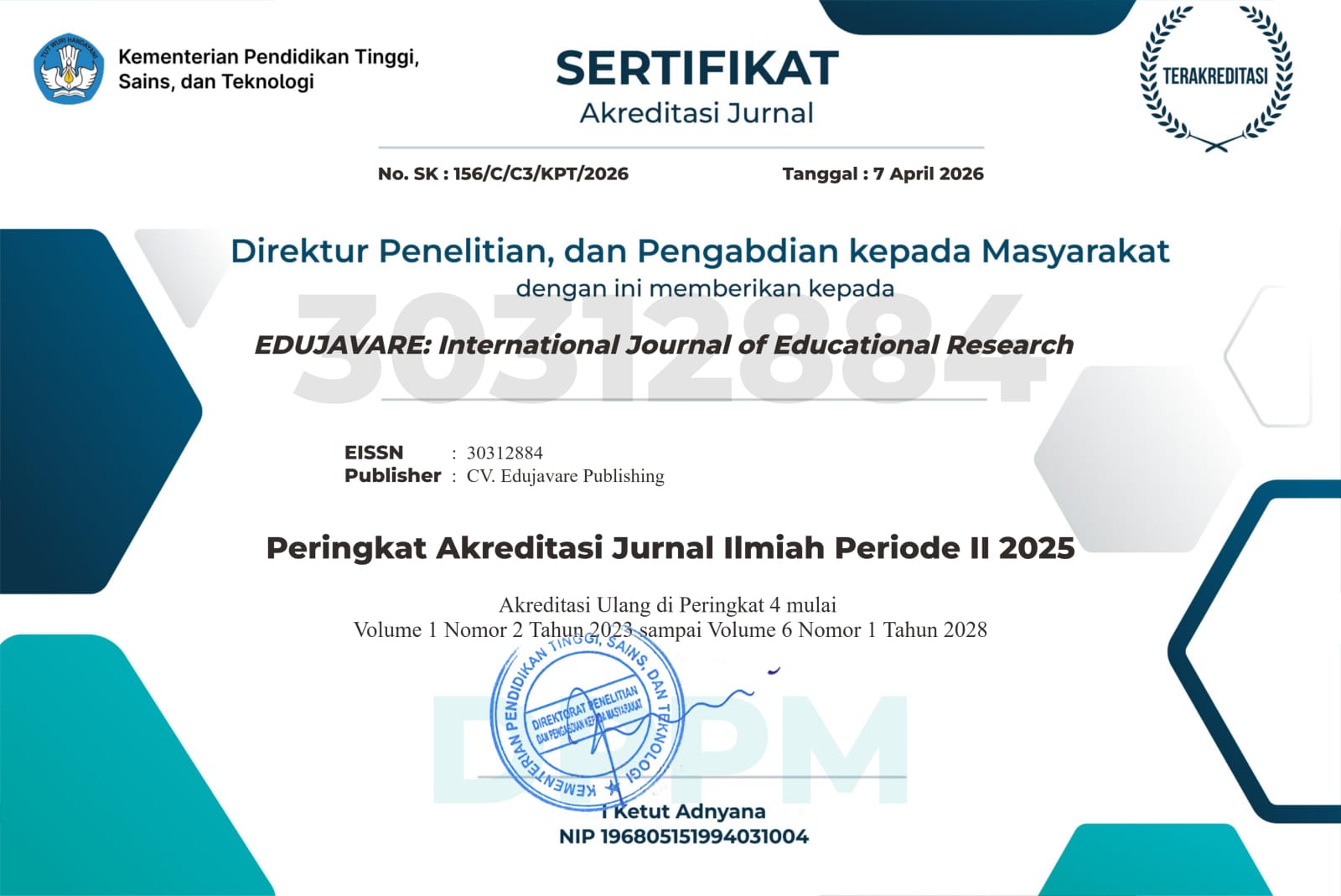
Copyright (c) 2026 EDUJAVARE: International Journal of Educational Research

This work is licensed under a Creative Commons Attribution-NonCommercial-ShareAlike 4.0 International License.
License: CC BY-SA 4.0 (Creative Commons Attribution-ShareAlike 4.0 International License)